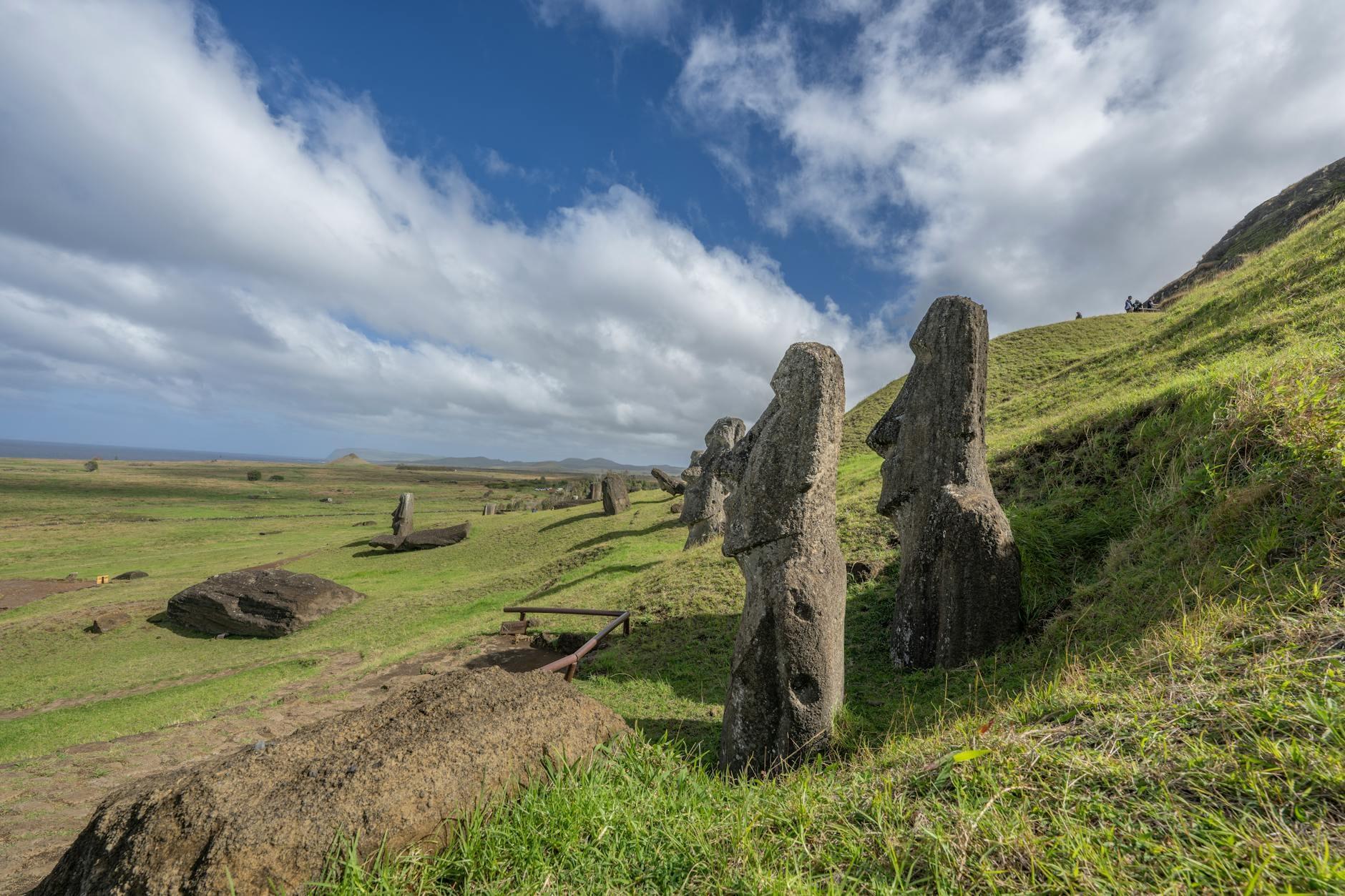
The moai statues emerge from grassland and volcanic slopes like sentinels from another age — some buried to their necks, others standing in perfect rows along the coast. Nearly 900 of these massive figures dot Rapa Nui, carved between 1250-1500 CE by Polynesian settlers who navigated here across 2,300 miles of open Pacific.
Beyond the statues lies a windswept triangle of extinct volcanoes, wild horses, and remarkably clear night skies. The island's 5,000 residents maintain strong Polynesian culture alongside Chilean governance, speaking Rapa Nui alongside Spanish. Most visitors fly from Santiago — a five-hour journey that emphasizes just how alone this place sits in the vast Pacific.