Home to some of the world’s most ethereal landscapes and some of Africa’s greatest wilderness, Namibia offers a singular experience. Its wide open spaces, star-washed night skies, and raw desert coast seem to come straight out of some surreal dream: the sort of dream that, in memory, never fails to tug at the heart.
There’s no question that Namibia supplies some of the greatest wildlife and scenery anywhere in Africa. Etosha National Park in the northwest is internationally lauded: From the heat-shimmering salt pans to the zebra, kudu, springbok, elephants, blue wildebeest, black rhinos, lions, hyenas, and other beasts congregating at waterholes, this is one of the planet’s great ecological reserves. Over on the Atlantic margin, the fog belt of the dune-skeined Namib Desert includes the Skeleton Coast, famed for its fur-seal colonies, its numerous shipwrecks, and the occasional beach-prowling lion.
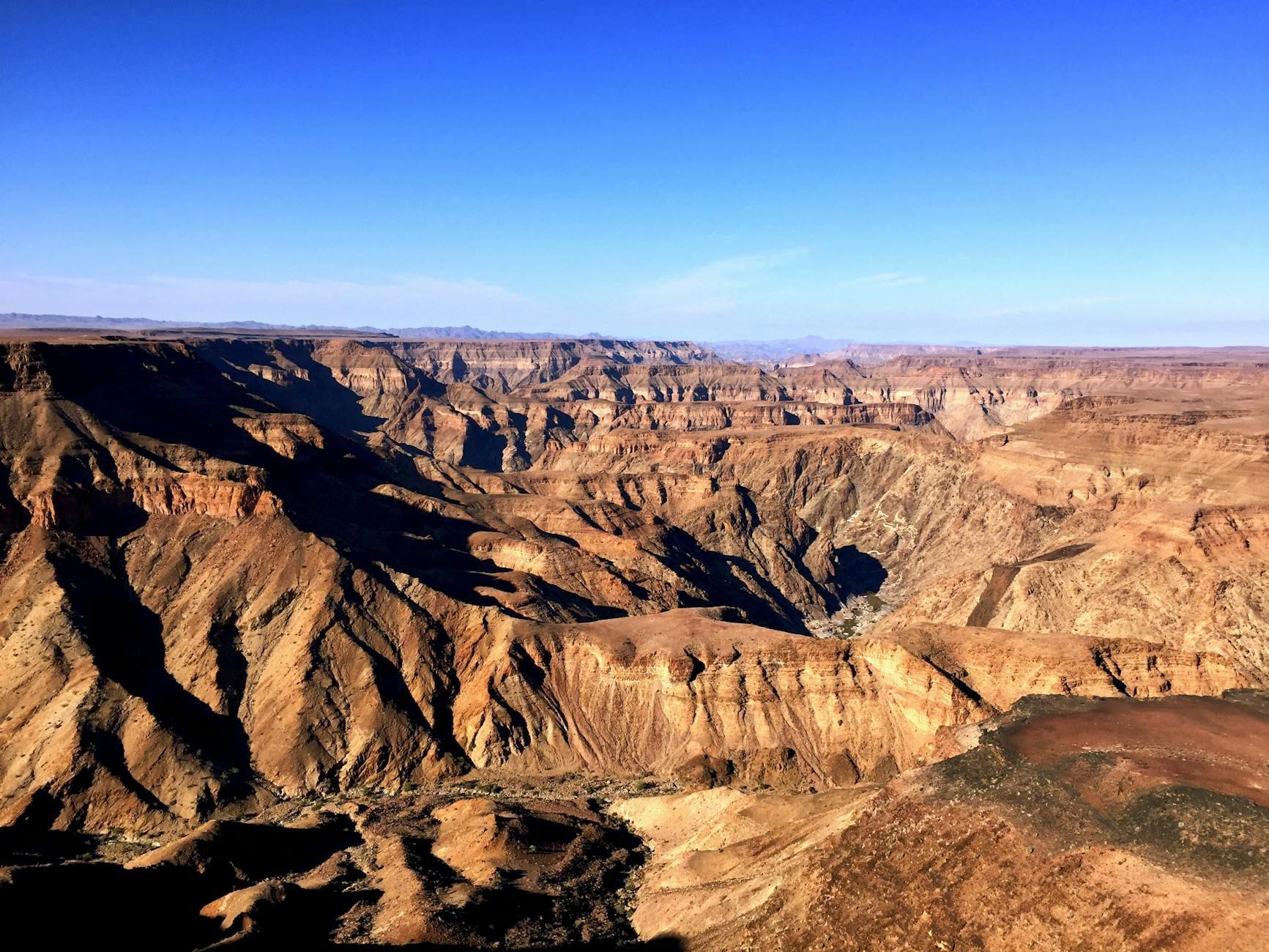
Outdoor adventurers, meanwhile, find one of the continent’s most exciting hiking venues in the gigantic Fish River Canyon, which shatters the great escarpment that separates the coastal Namib Desert from Namibia’s interior plateau. Whether you’re into independent excursions or guided treks, this 1,800-foot-deep gorge, which serves as a worthy counterpart to the Grand Canyon of the Colorado, delivers unbelievable vista after unbelievable vista.
Like few other corners of Africa, Namibia accommodates road-tripping and adventure sports. The Namib Desert, for instance, is a growing destination for adrenaline junkies: Besides surfers hugging the cold breakers of the Skeleton Coast, the soaring inland dunes are increasingly renowned for “sandboarding,” the arid-desert version of snowboarding. And no trip here would be complete without a skydive over Swakopmund.
Namibia’s one of the most sparsely populated countries on Earth, but those who take the time to investigate its ethnic and cultural diversity will come away rewarded. The country’s share of the Kalahari forms part of the heartland of the San or Khoisan people, traditional hunter-gatherers known for their rich mythology. Namibia’s legacy of German colonialism, meantime, finds jovial expression in the capital Windhoek’s famed Oktoberfest celebration, which has been going strong for better than half a century.
Desolate sand-whipped roads, bizarre inselbergs, single-file herds of oryx and elephant, the cosmopolitan but modestly scaled bustle of Windhoek—Namibia casts a remarkable sun-blasted spell on any traveler open to its frontier character.
15 things not to miss.
- Rhinos

- SossusvleiDune 45, Deadvlei — go at first light

- Skeleton CoastShipwrecks, fog, Cape fur seal colonies

- Etosha NPSelf-drive safari around the salt pan

- SwakopmundBase for skydiving and quad-dune runs

- DamaralandDesert-adapted elephants and rock art

- Etosha National ParkSpot iconic African big game thronging dry-season waterholes in Etosha—and stunning gatherings of pelicans, flamingoes, and other birds when the huge salt pans flood.

- Fish River CanyonOne of the world’s grandest gorges, this 100-mile-long defile, which plunges some 1,800 feet from rim to floor, breaks western Namibia’s long escarpment.

- BrandbergSoaring 8,550 feet above the Namib Desert, this massif forms Namibia’s high point; among its incredible collection of San rock art is the enigmatic “White Lady” panel.

- SpitzkoppeThis stark cluster of granite horns and whalebacks conceals San rock paintings and served as the “Dawn of Man” setting in 2001: A Space Odyssey.

- Waterberg PlateauThis sandstone tableland, center of a large game reserve, is a mysterious cliff-walled redoubt: home to rhino-haunted woods, great vulture roosts, San artwork, and dinosaur trackways.

- Mudumu National ParkOne of several refuges in the Caprivi Strip—Namibia’s northeastern sliver—this park shelters buffalo, painted hunted dogs, lions, cheetahs, and other wildlife.

- Khaudum National ParkWilderness lovers find the southern Africa bush at its most primal at this remote, lion-ruled park on the Botswana line.

- Christ ChurchFinished in 1910, this handsome Lutheran church is one of Windhoek’s most prominent landmarks.

- National Museum of NamibiaHoused in a German building built in 1890, this museum covers quite a lot of ground—from indigenous rock art to the national independence struggle.

What actually worked.
The useful stuff.
- Getting there
- Fly WDH via JNB or FRA. Direct from Doha.
- Getting around
- Rent a Toyota Hilux 4×4 with rooftop tent.
- Money
- NAD pegged 1:1 to ZAR. Cash outside cities.
- Safety
- Very low crime. Watch wildlife and roads.
- Connectivity
- Spotty; MTC SIM at the airport.

