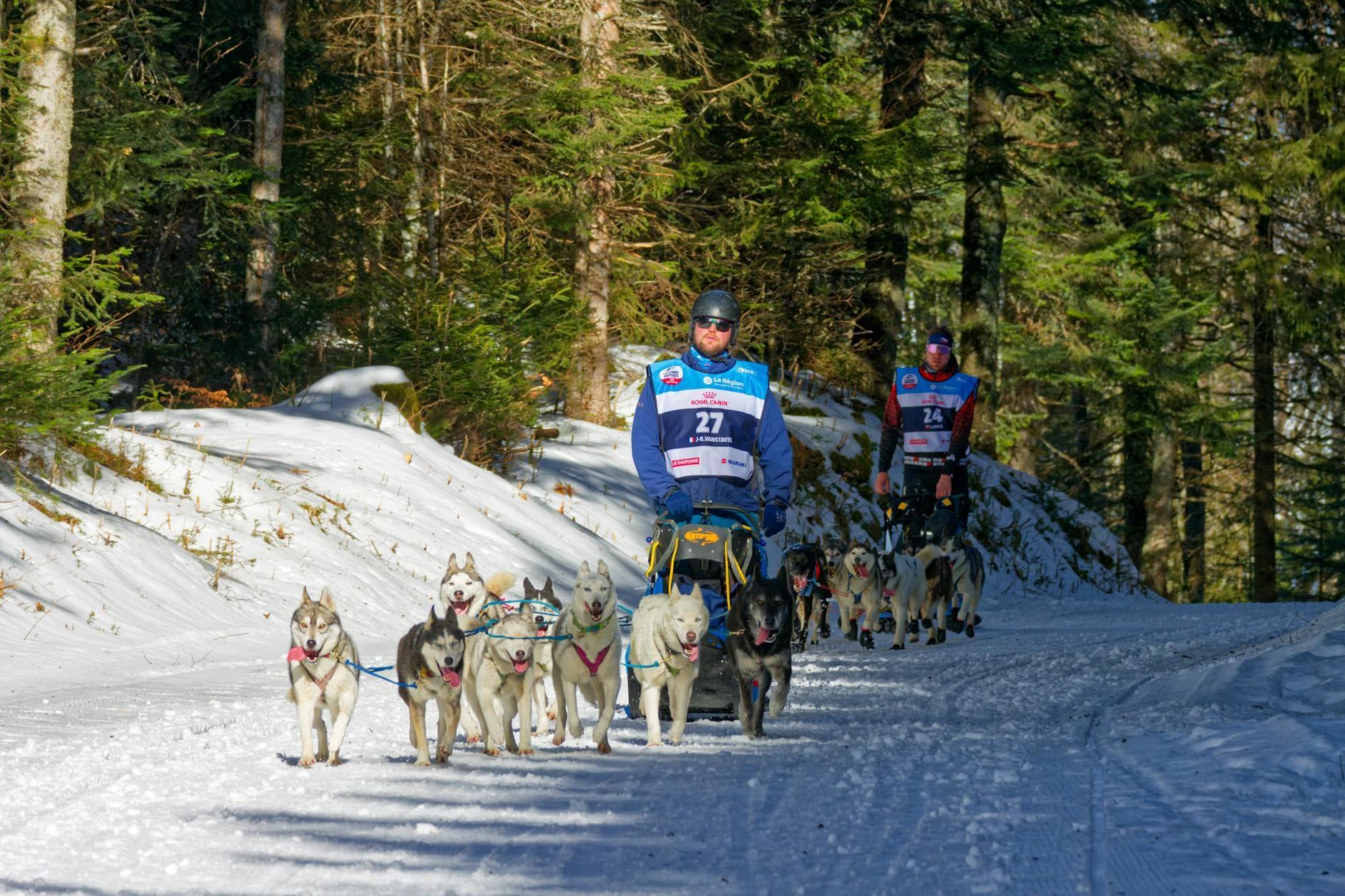
Most people associate dog mushing with the Alaskan wilderness, in large part due to the classic, Jack London’s Call of the Wild. Men and dogs have been working and living together for a long time, even since before recorded history. And archaeological finds in North America and Siberia have yielded evidence of dog sledding from at least 4,000 years ago.
Then with the explosion of people into the area during the gold rushes of the 19th and 20th centuries, dog sledding really took off. Dogs were bred specifically for the harness, and sledders explored the most remote areas in search of treasure.
There are several breeds of dogs commonly used for mushing, but the most popular is the Alaskan Husky. Some breeds are used for speed, while others are better for pulling loads, but all dogs are specially trained to work as a team. The number of team members varies according to need, up to 16 for the famous Iditarod race.
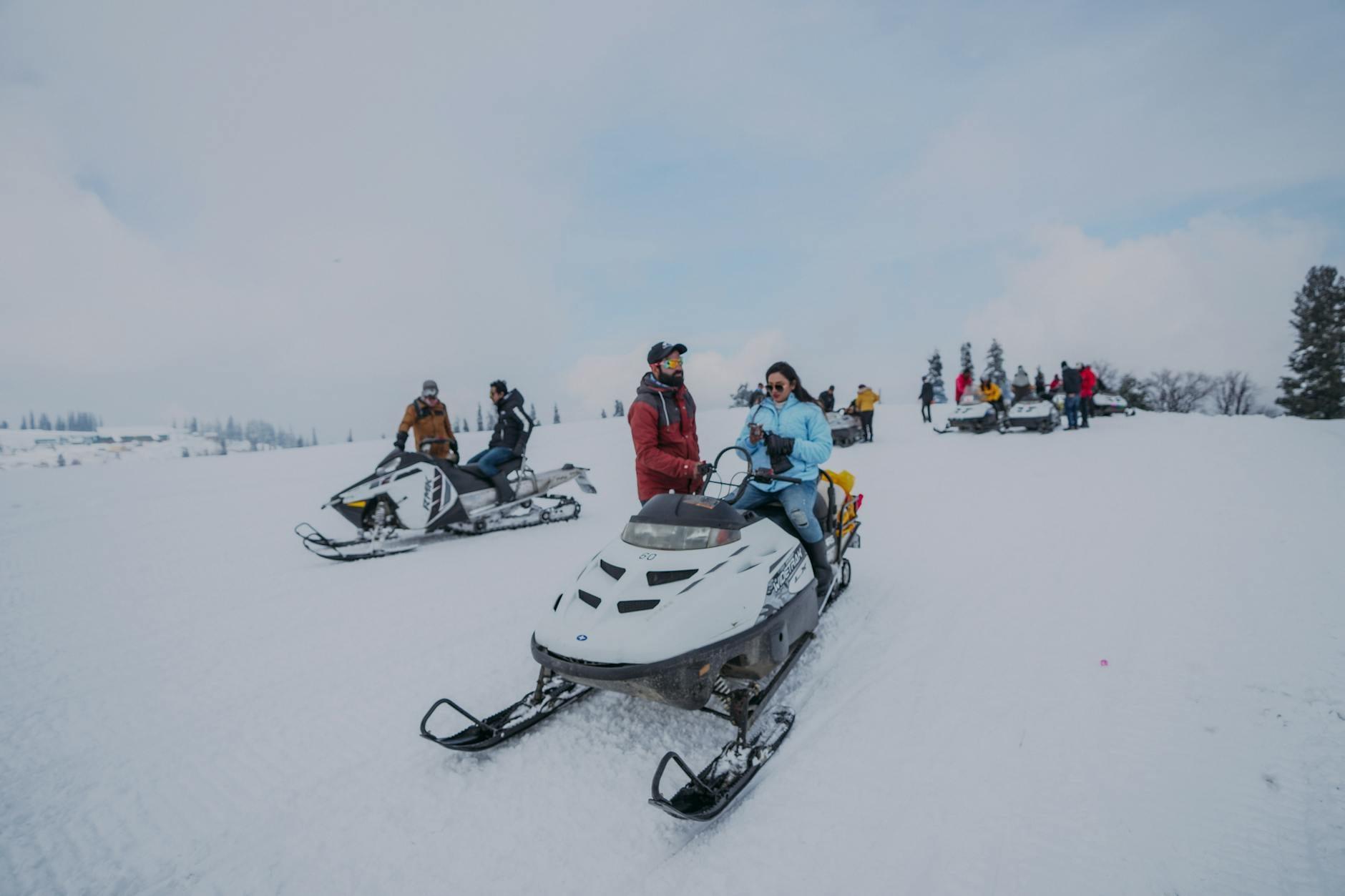
Today, the helicopter, airplane, and snowmobile have replaced the dog sled as an essential tool for most, but the tradition is alive and well as a sport and a recreational pursuit.
Those who would try their hand at dog sledding will find it an exhilarating and demanding pursuit. It pits man and beast, working together for mutual survival, against the harshest of elements. And offers an authentic glimpse into the everyday life of the hardy pioneers of the North.
There are plenty of organizations and enthusiasts ready and willing to help a greenhorn try out the experience. Both the equipment and the dogs have changed somewhat, with some sleds using space-age materials, and the dogs are now leaner and smaller than their Victorian ancestors. But the excitement and fun is still the same, and it’s a great way to see some of the world’s most beautiful scenery up close and personal. And get a good face licking.