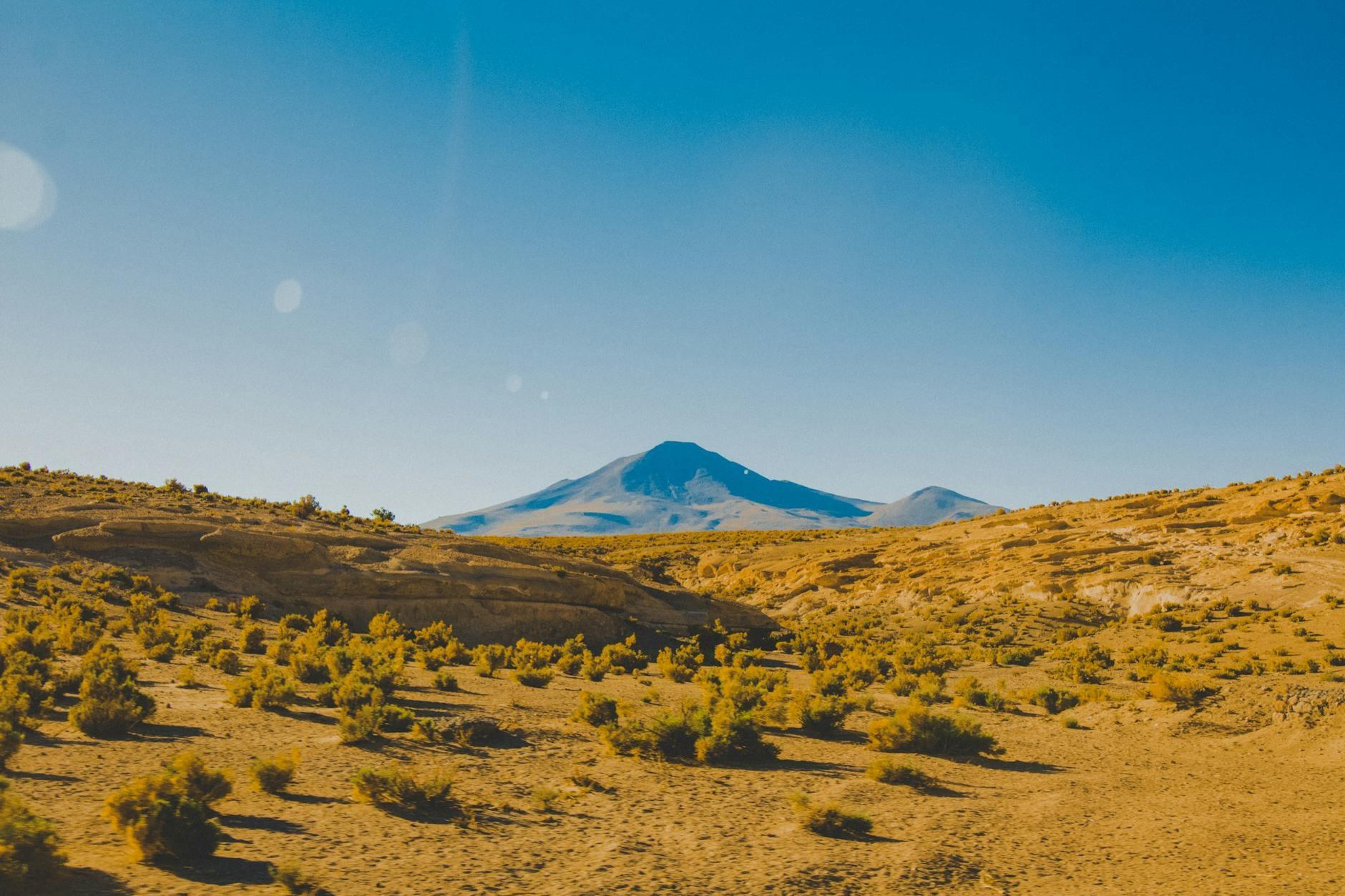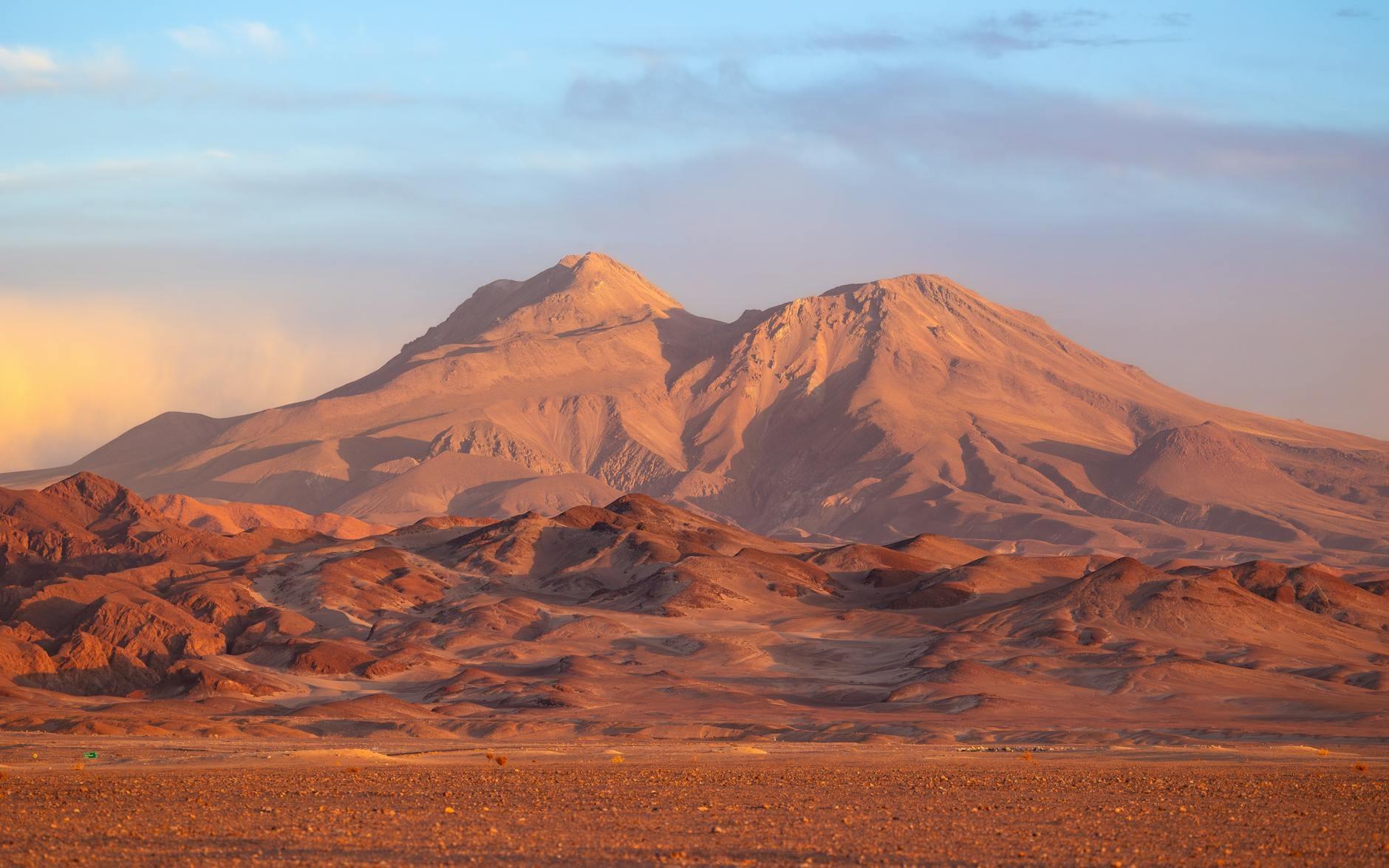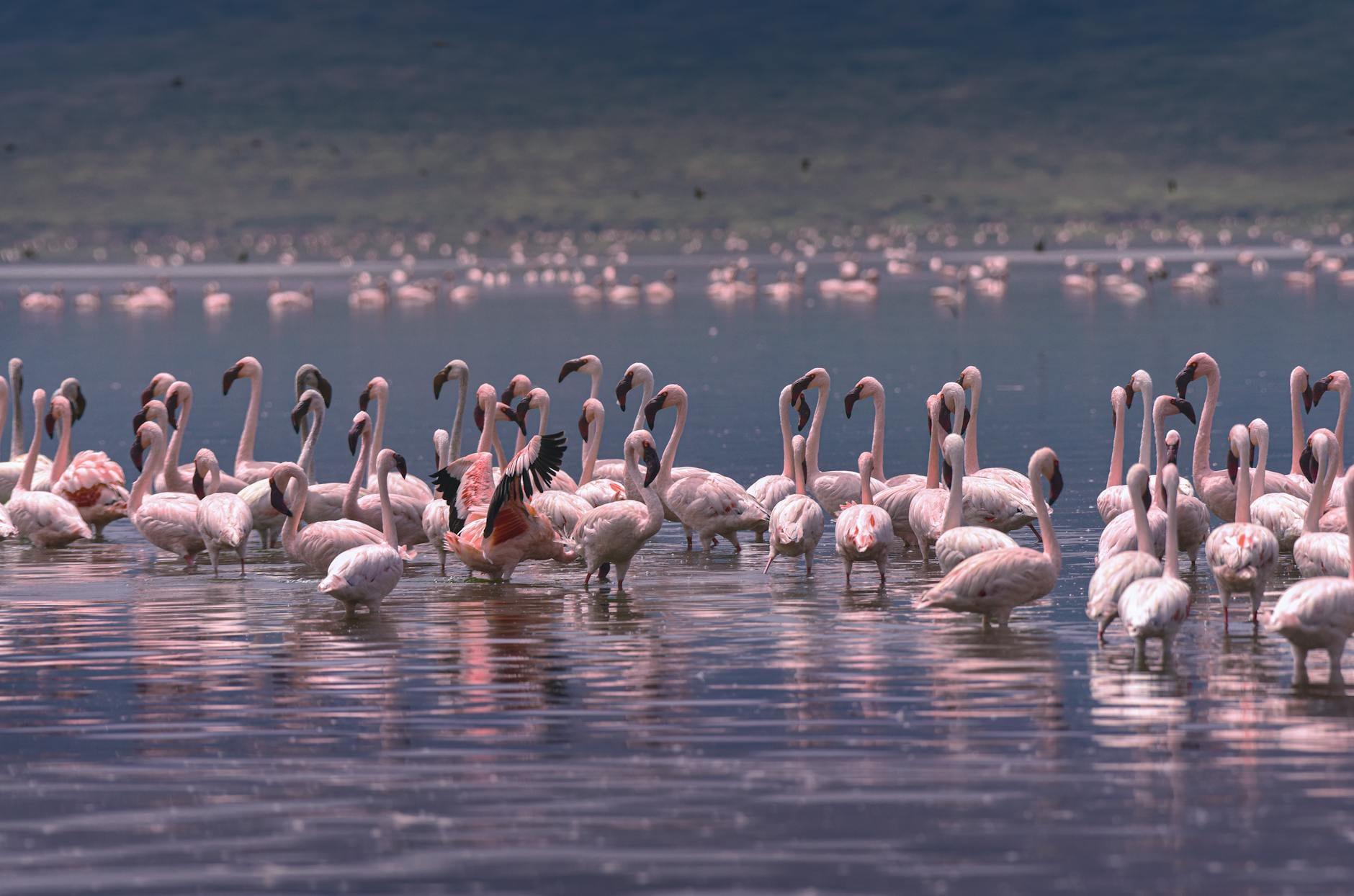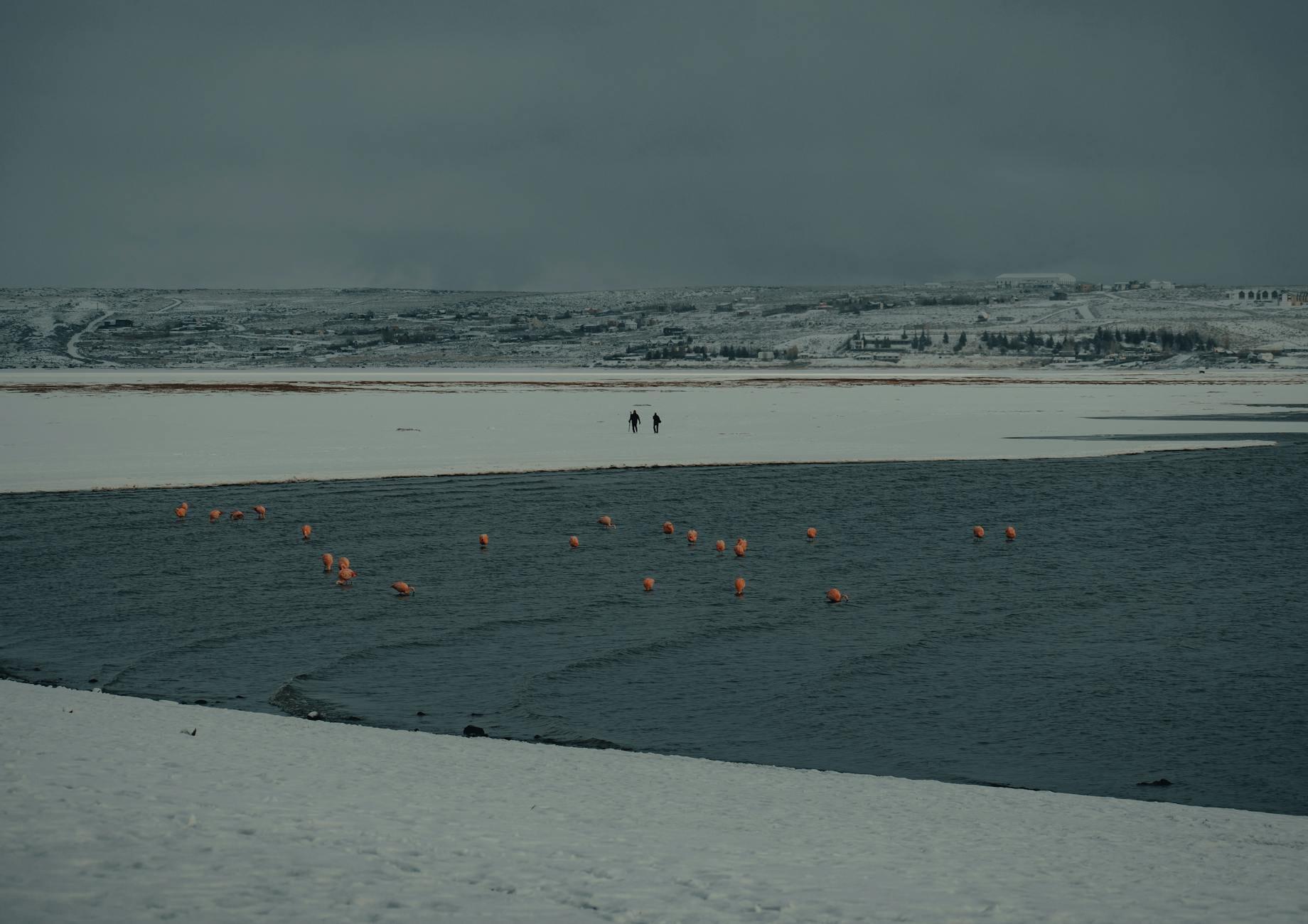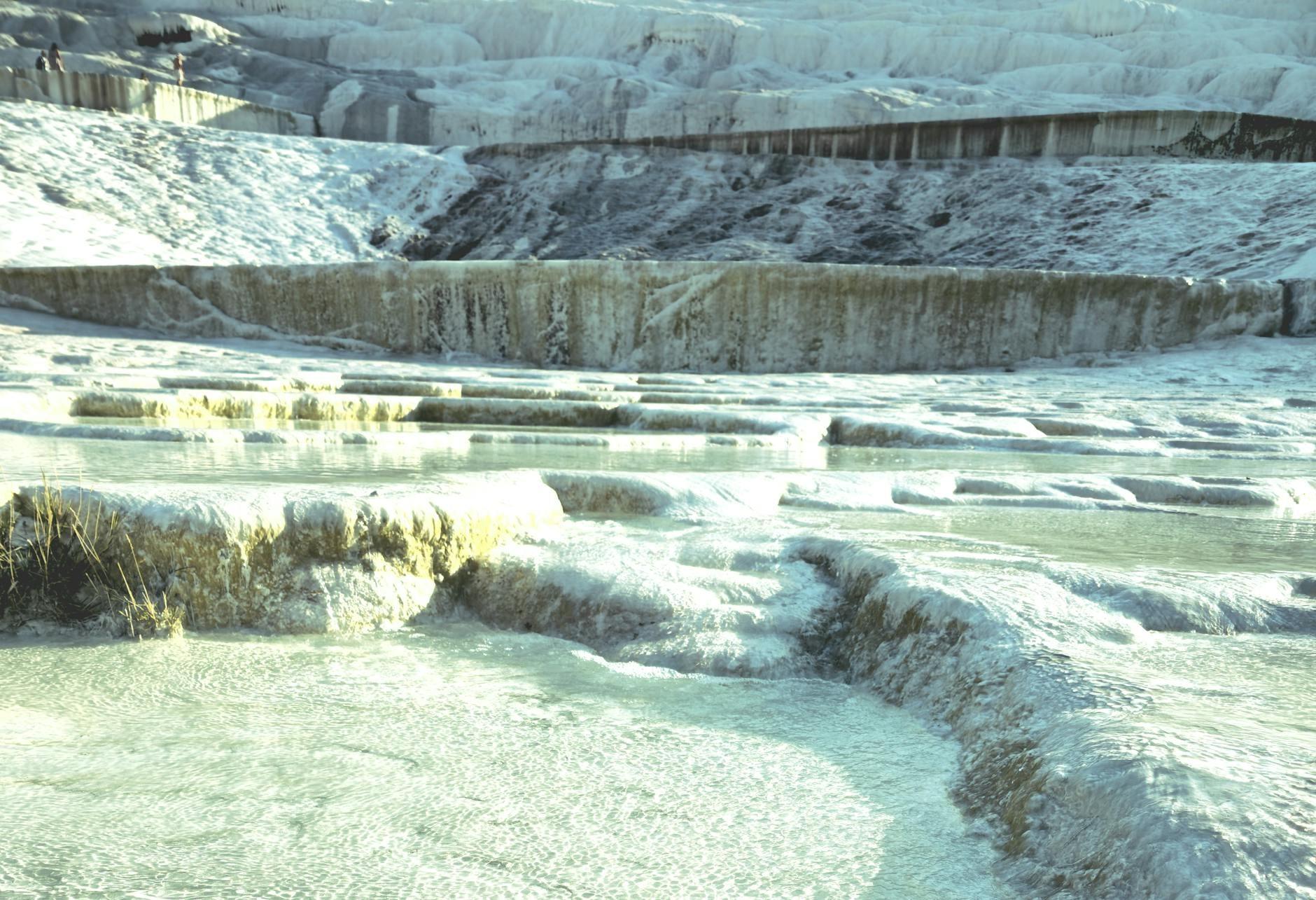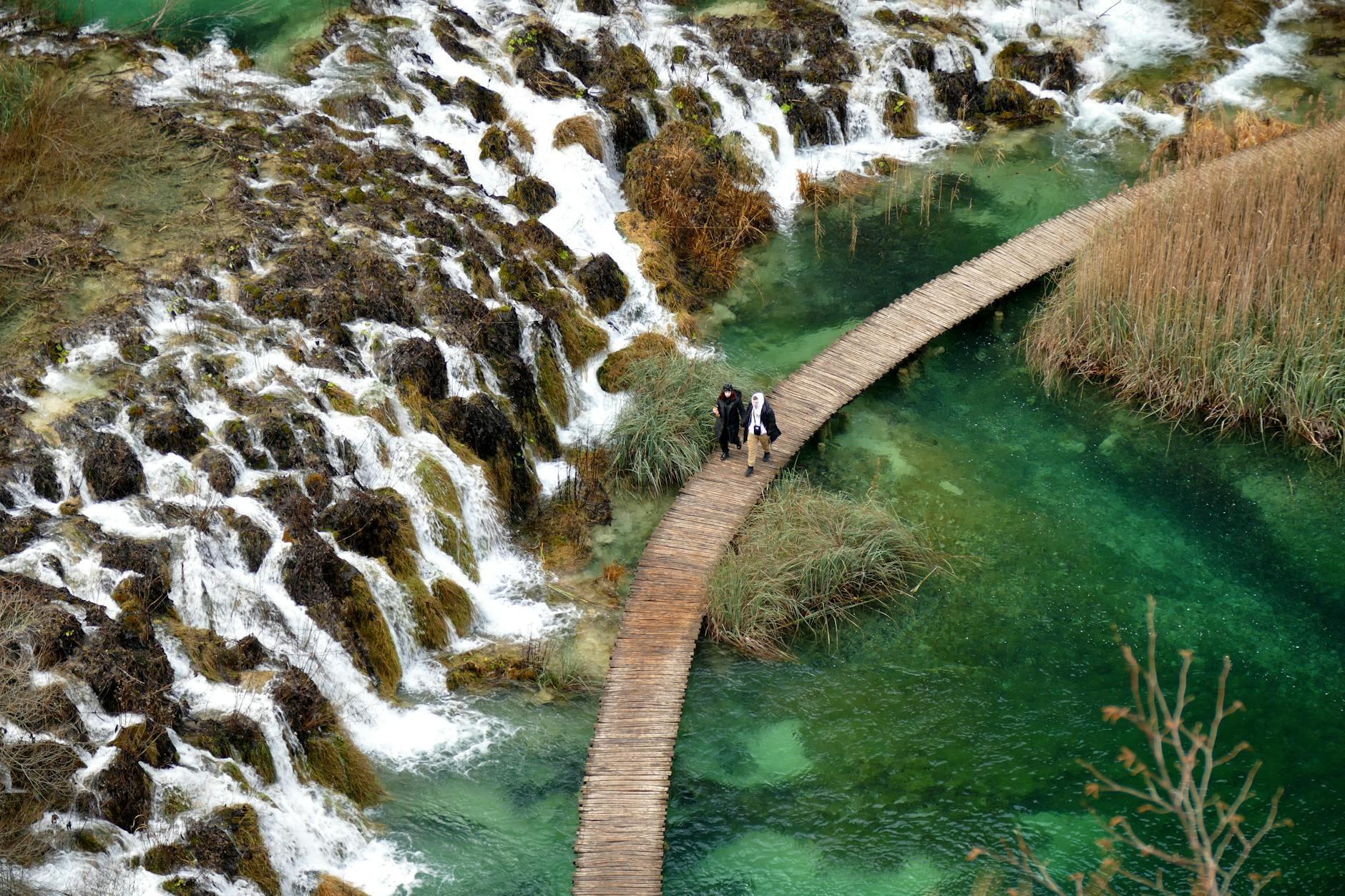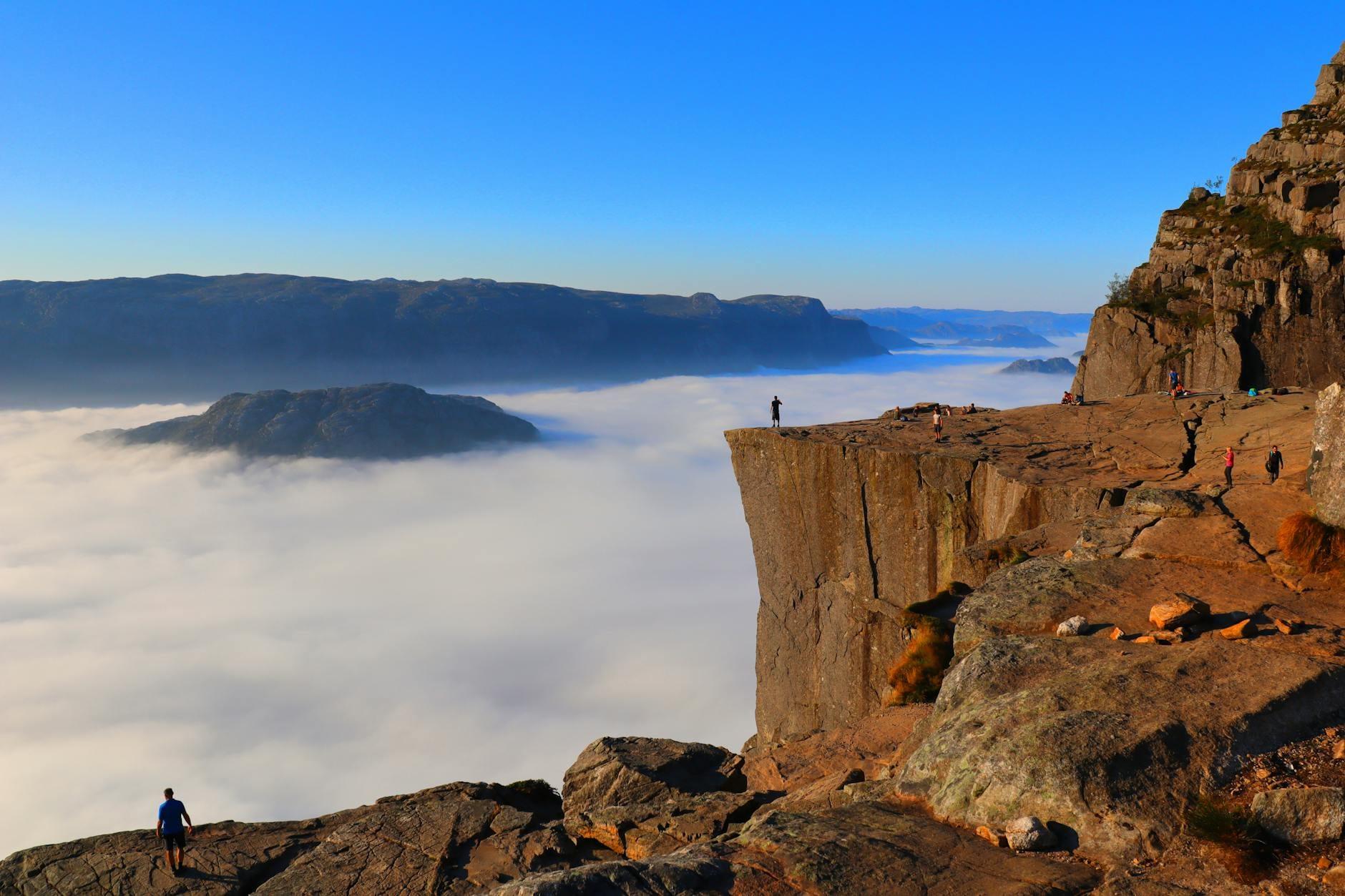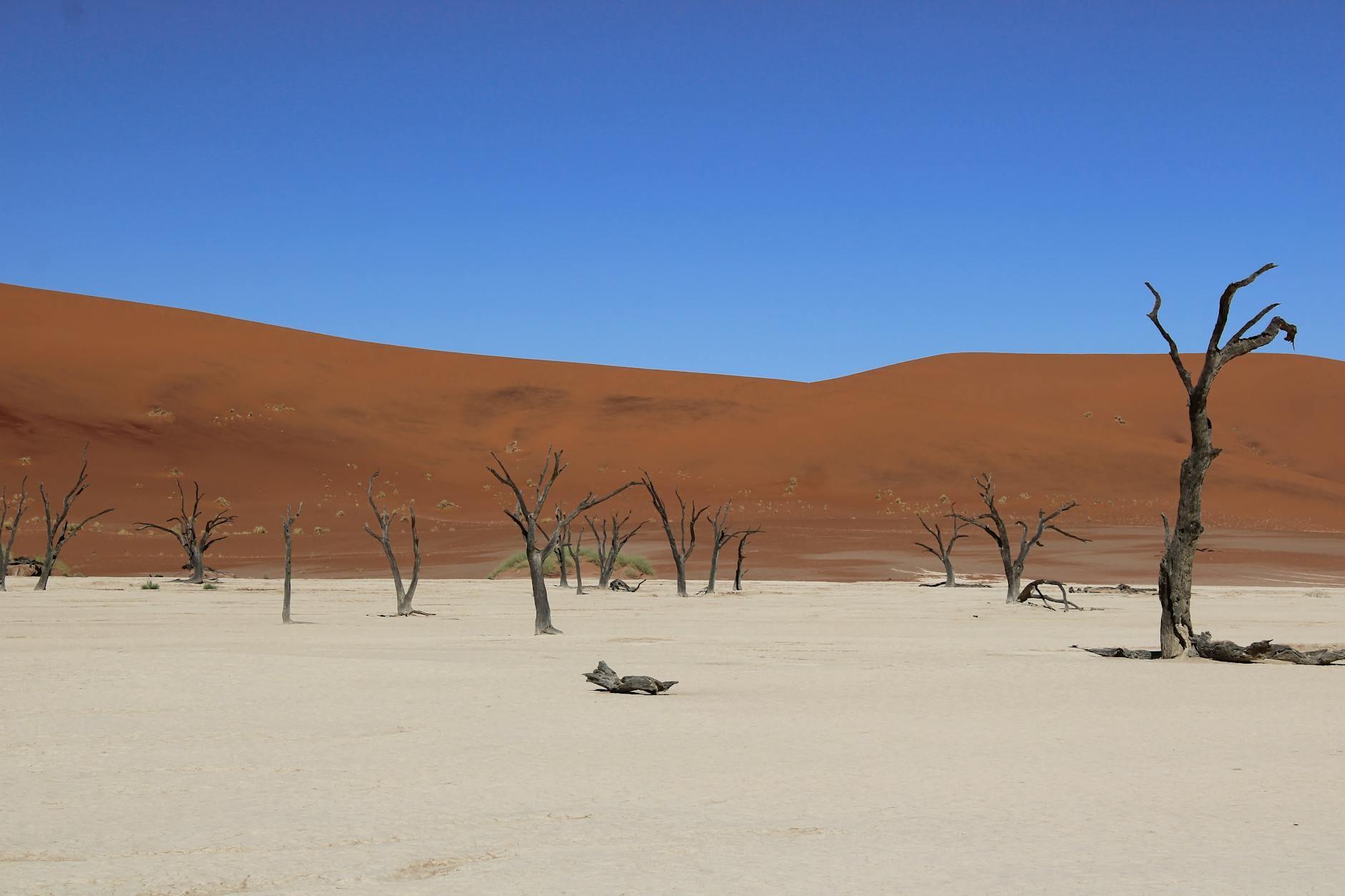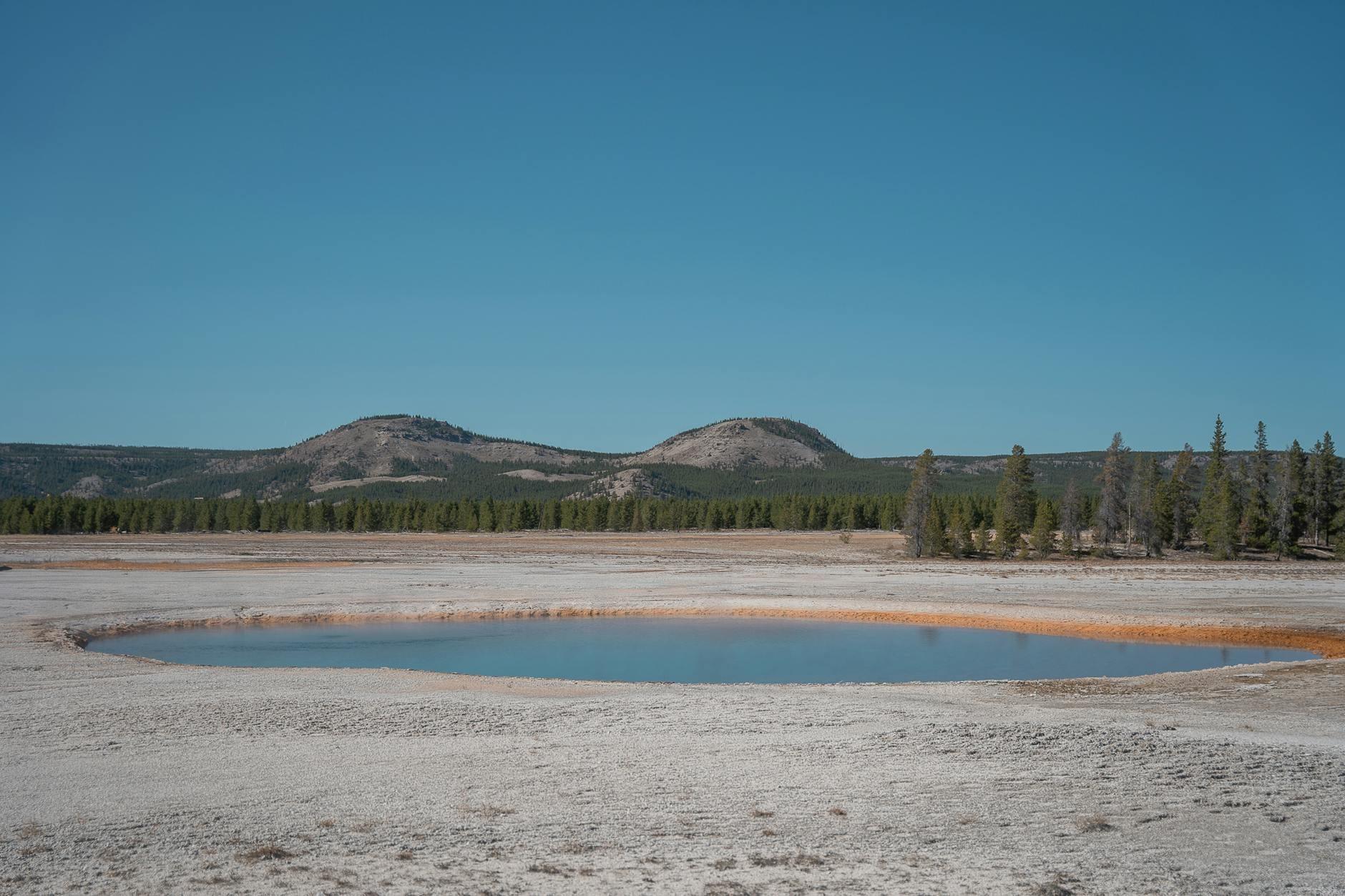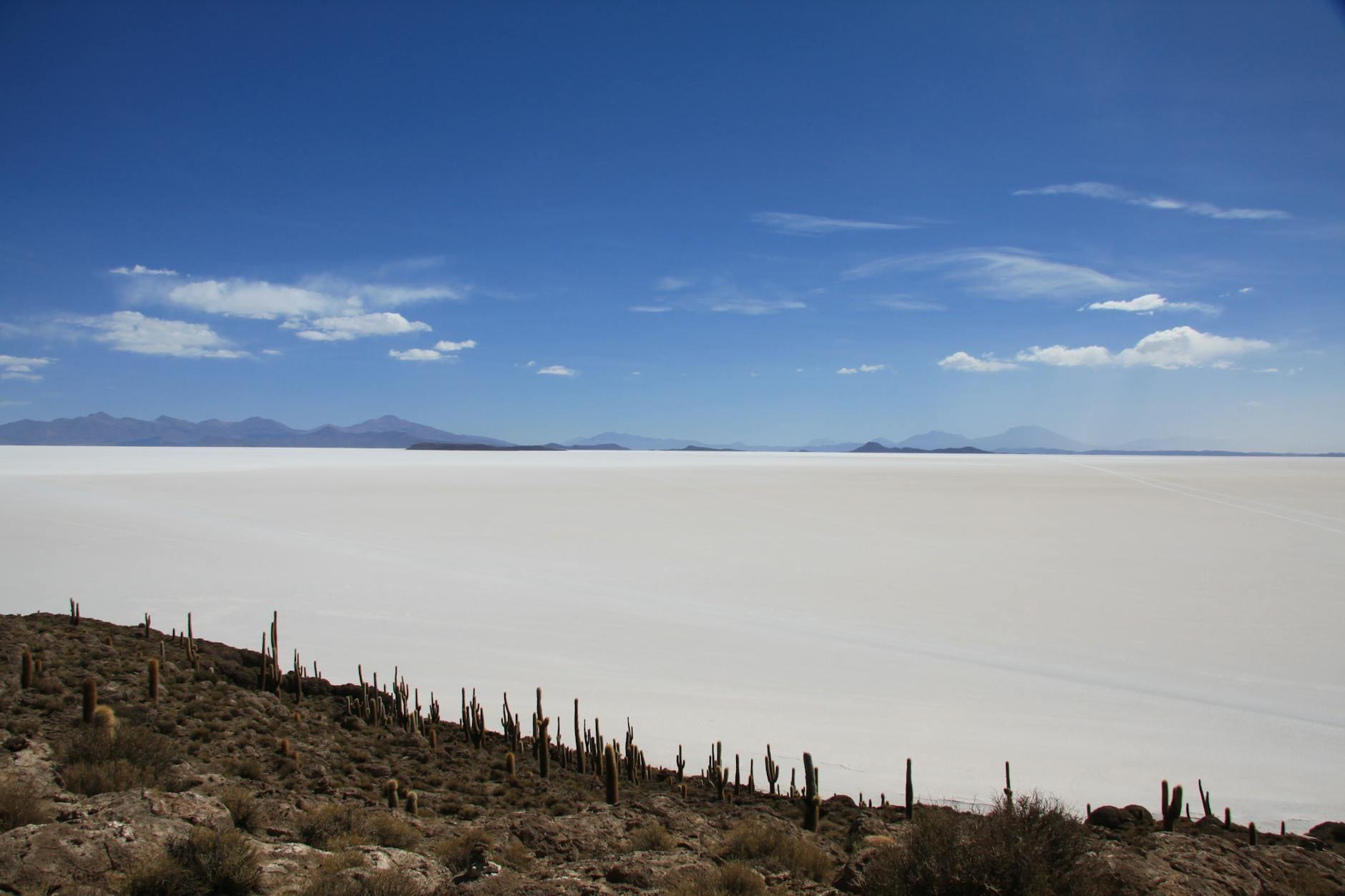
Located on a high plateau in southwest Bolivia, near the crest of the Andes Mountains, Salar de Uyuni is the largest salt flat on the planet. Its surface is almost entirely level and stretches 4,086 square miles, making it more than 100 times the size of the Bonneville Salt Flats in the United States. Across this wide expanse, a thick layer of salt crust covers a pool of mineral-rich brine. Aside from the extraction of salt from the flats, potassium, magnesium, and lithium are also plentiful. And Lithium is probably the most economically important mineral found in Salar de Uyuni, accounting for 50-70% of the earth’s total reserves. Salar de Uyuni is also an important breeding ground for three species of pink flamingos and home to more than 80 other species of birds.
During the rainy season, a thin layer of water sits on top of the salty crust, creating a beautiful, glassy mirror that stretches as far as the eye can see. This optical phenomenon draws photographers and tourists from all over the world. Despite its remote location and height of 11,995 feet above sea level, the Salar also happens to be a major transportation route across the Andean Plateau.
Traveling to Salar de Uyuni
The El Alto international airport near La Paz is the major hub for this area. From La Paz, you can take a small domestic flight to the tiny town of Uyuni, or you can travel by bus, which takes anywhere from 12 to 15 hours. Rental cars are also available in La Paz, but the roads are poorly marked, and a 4x4 is recommended in case of localized flooding.
From Uyuni, the Salar can be visited on a day trip or as part of a multi-day tour. If you are hiking, local buses depart from Uyuni and will drop you off. Tour companies are plentiful, but drunkenness is common among drivers, so be sure you have a responsible driver for your excursion. Several hotels are located on the outskirts of the flats, and since building materials in the area are sparse, most have been built out of blocks of salt. However, they should be reasonably priced and comfortable.
While you’re there, be sure to visit the train cemetery near Uyuni, which showcases abandoned trains used during the height of the mining industry. When the industry collapsed in the 1940's, the trains were left behind, and are now a popular attraction on the edge of the flats.
Unlike any other place in the world, the glistening salt of Salar de Uyuni is breathtaking in its beauty and inspiring in its vastness. A visit to this surreal landscape is one you’ll never forget.