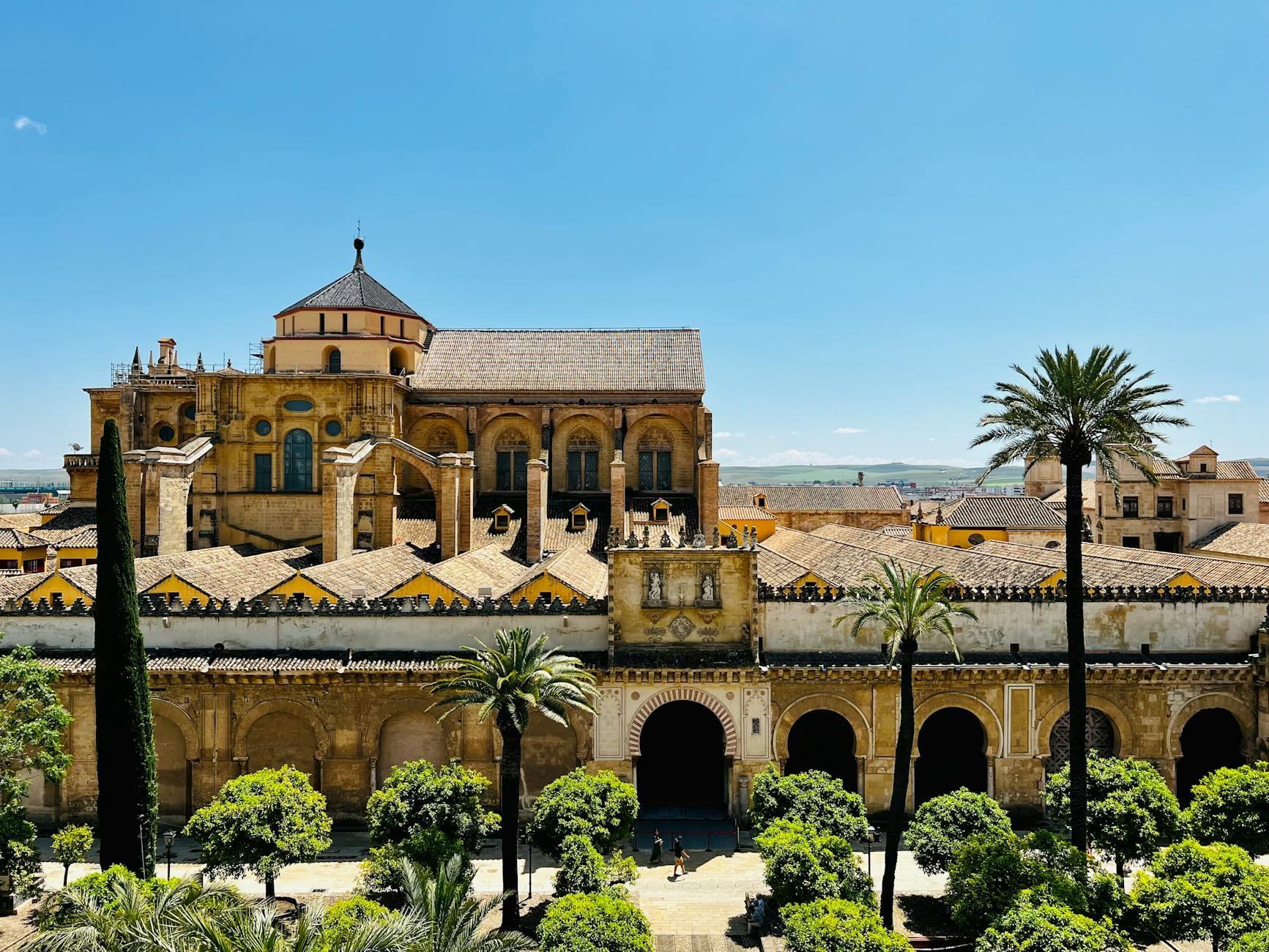
One of the most beautiful architectural and artistic building projects in the world, that you’ve absolutely never heard of, is the Great Cathedral and Mosque in Cordoba, Spain. Originally a Roman temple to the God Janus, the Visigoths rebuilt it as a church dedicated to their Arian version of Christianity combined with their former paganism. After falling to the invasion of the Moors in 711, Cordoba was made a capital city by Caliph Abd-al-Rahman in 786. He undertook the expansion and glorification of the mosque in an attempt to make it outshine the contemporary mosque at Damascus.
Using existing Visigoth concepts, such as the horse-shoe arch, the caliph built one of the most impressive architectural wonders of the world at the time, and one that remains distinct and awe inspiring today. Expansion and beautification continued over two and a half centuries until the collapse of the caliphate in 1031 AD, from which very little beside the Great Mosque survived. Then in 1236 Cordoba fell to Saint Ferdinand III, and Nicene Christianity was installed as the favored religion. The Great Mosque became the Great Cathedral, with additions including a central cathedral nave and the expansion and conversion of the external minaret to the current bell tower.
Vestiges of the influence from all of these previous owners make the Mosque/Cathedral a truly spectacular blend of cultures. From Roman through Visigoth and Islamic, to what is today a Roman Catholic Cathedral.
The large prayer hall is the center of attraction and the most elaborately decorated part of the former Mosque. Some of the original Roman columns were incorporated, and more were imported from other parts of the Iberian Peninsula. The great hall contains 856 columns made of marble, onyx, jasper, and granite. Above the columns are double horse-shoe arches, which are beautifully articulated of alternating sections of red brick and white stone for a visually stunning effect. Along the periphery of the hall dozens of naves are embellished with beautiful marble, artwork, and inscriptions. But the primary focal point of the hall is the main prayer niche, or mihrab, which is richly decorated with inscriptions and artwork. The mihrab is topped by another horseshoe arch beautifully accented with pieces of glass and gold in an opulent display of multiple colors. But the dazzling splendor of the dome is itself worth the visit. Architectural ribs projecting down from the ceiling and the dome, itself, are stunningly decorated with symbolic artistic shapes, patterns, and calligraphy, exquisitely rendered in rich colors from precious metals and stones. It is a visual treat that must be seen to be fully appreciated.