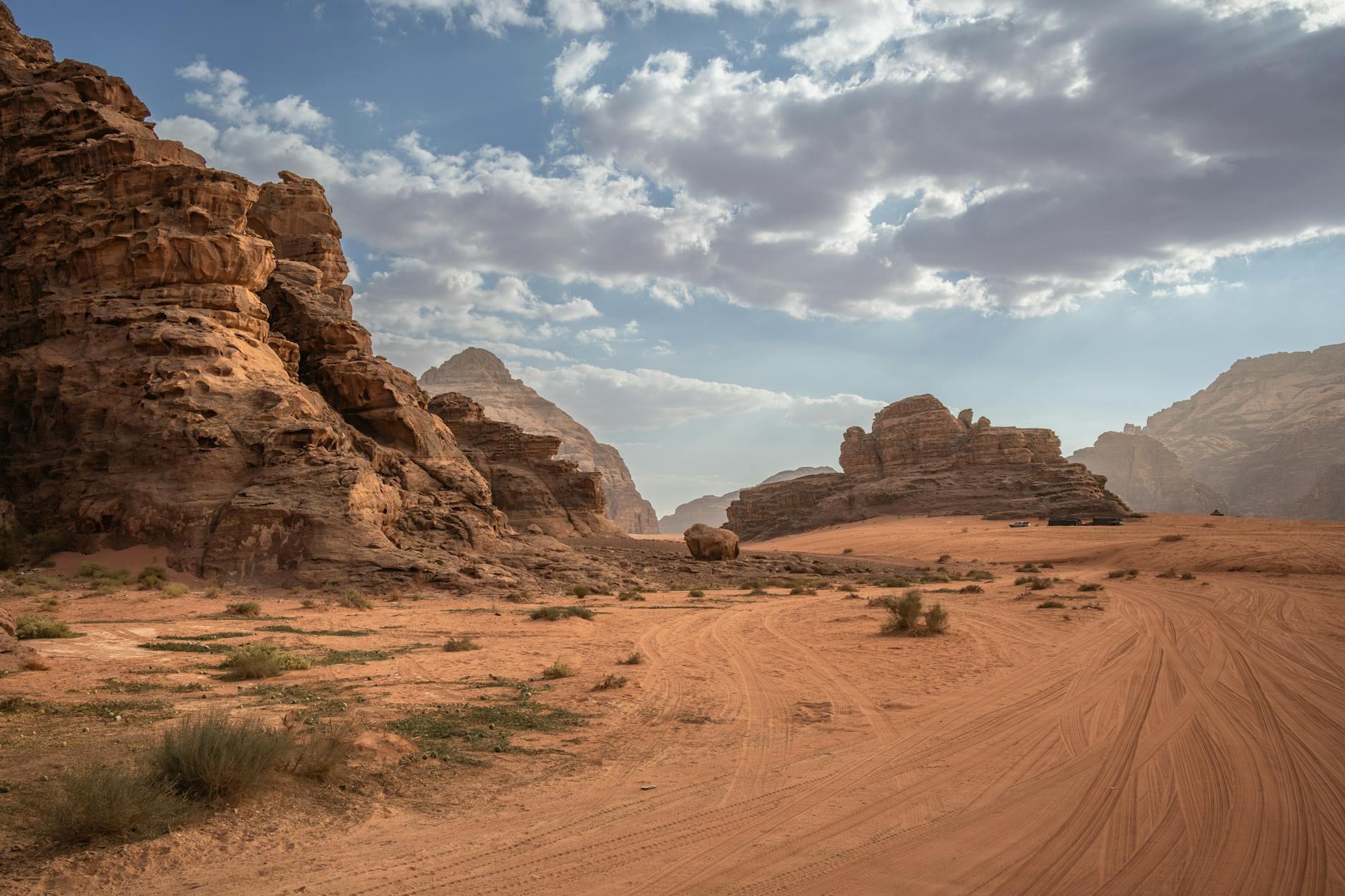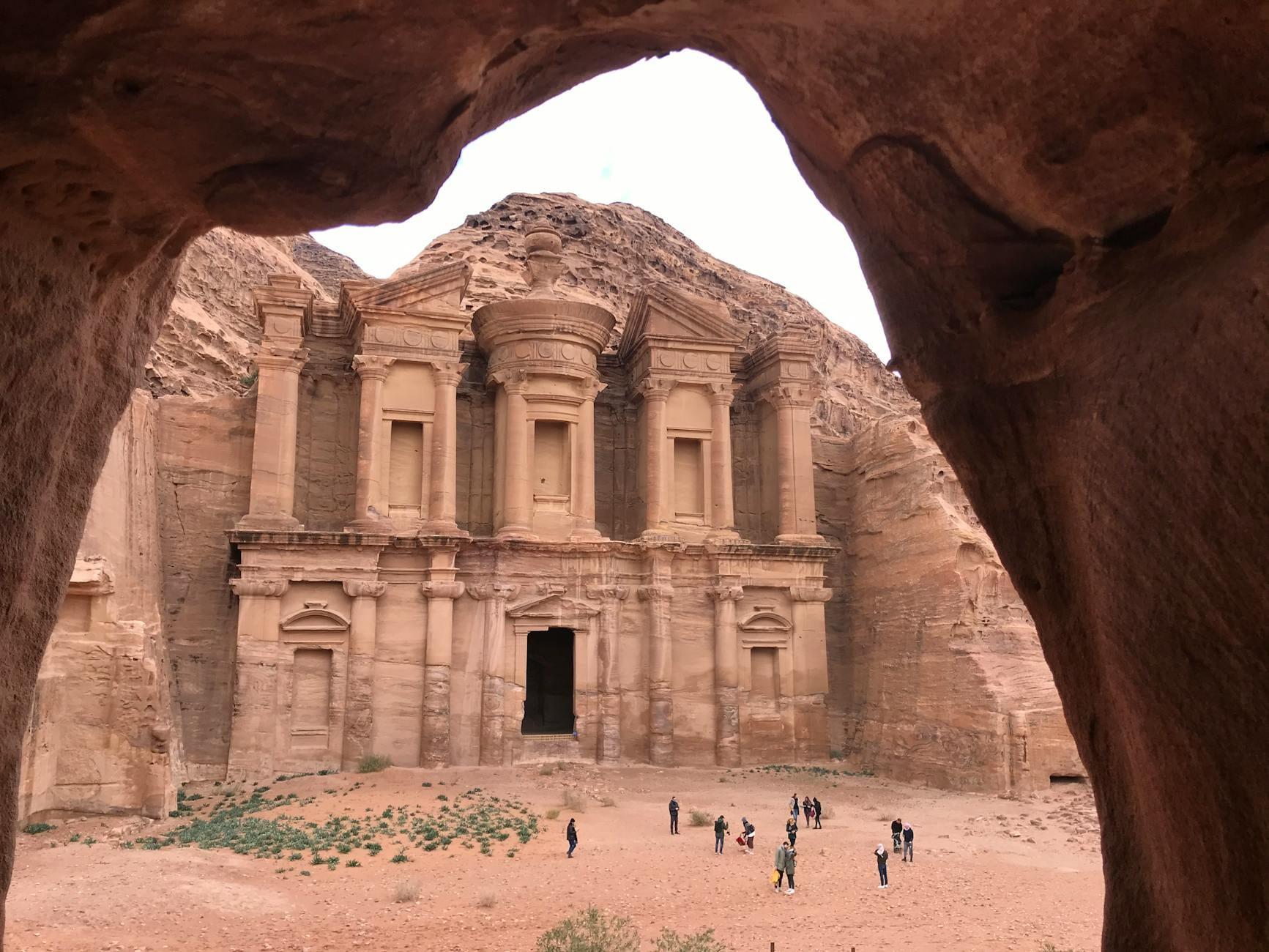
The Siq, a three-quarter mile crack in the mountain will be your entrance to the wonders of Petra, otherwise known as the Rose City. Sandstone carvings can be seen along the way, and as the Siq opens out into the sunlight, visitors are confronted with the most impressive of Petra's attractions, The Treasury; whose name is something of a shot in the dark, as nobody knows with any certainty what its actual purpose was. Although at 128 foot tall and beautifully carved into the reddish hued sandstone mountain, it’s breathtaking enough that you likely won’t much care what it was originally used for. By contrast, the interior of The Treasury is quite unimpressive and empty, so if you were hoping to channel your inner Indiana Jones and find the Holy Grail, you might be in for a letdown.
After leaving the Treasury, you’ll find the Street of Facades, along which are carved numerous tombs, which account for most of Petra’s monuments. This "street" ends at the 7,000-seat Roman Theater, which is still sometimes used for dramatic performances. A quick walk farther on are the Royal Tombs. As the name implies, these are the most elaborate and largest of the tombs. Although, as is the case with all of Petra's tombs, there are no longer any "tenants" in them, and we do not know who they were. Petra is so old--estimates range as far back as the fifth century BC--that little is known of people responsible for its existence. What is believed, with some certainty, is that the buildings found at Petra were almost exclusively used for civic purposes or burial chambers, rather than permanent dwellings.
Next is an 800-step climb up to the Monastery, the largest of Petra's hewn edifices. And physical conditioning will be seriously tested in this nearly hour-long climb to the top. Donkey rides are optional, but cruel, and you can certainly use the exercise more than them.
Other attractions include the Hadrian Gate, the Great Temple, and the Silk Tomb, named for the attractive wavy coloration of the sandstone. Nearby are The High Place of Sacrifice and the Mountain of Aaron--supposed to be the burial place of the brother of Moses.
An earthquake in 551 and the Arab conquest of the region in 663 precipitated a total abandonment of Petra. Its grandeur and mysteries remained unknown to Western eyes for over 1200 years until rediscovered by a Swiss traveler and geographer, Jean Louis Burckhardt in 1812. Today Petra is the most significant tourist attraction in Jordan, and is visited by over half a million people annually. The town of Wadi Musa is a 20-minute walk from the entrance to Petra, which is, itself, best seen on foot, although some of the routes are quite strenuous. One-, two-, and three-day passes are available, because unless you have the physical conditioning of a marathon runner, one day is not enough to see the whole site.