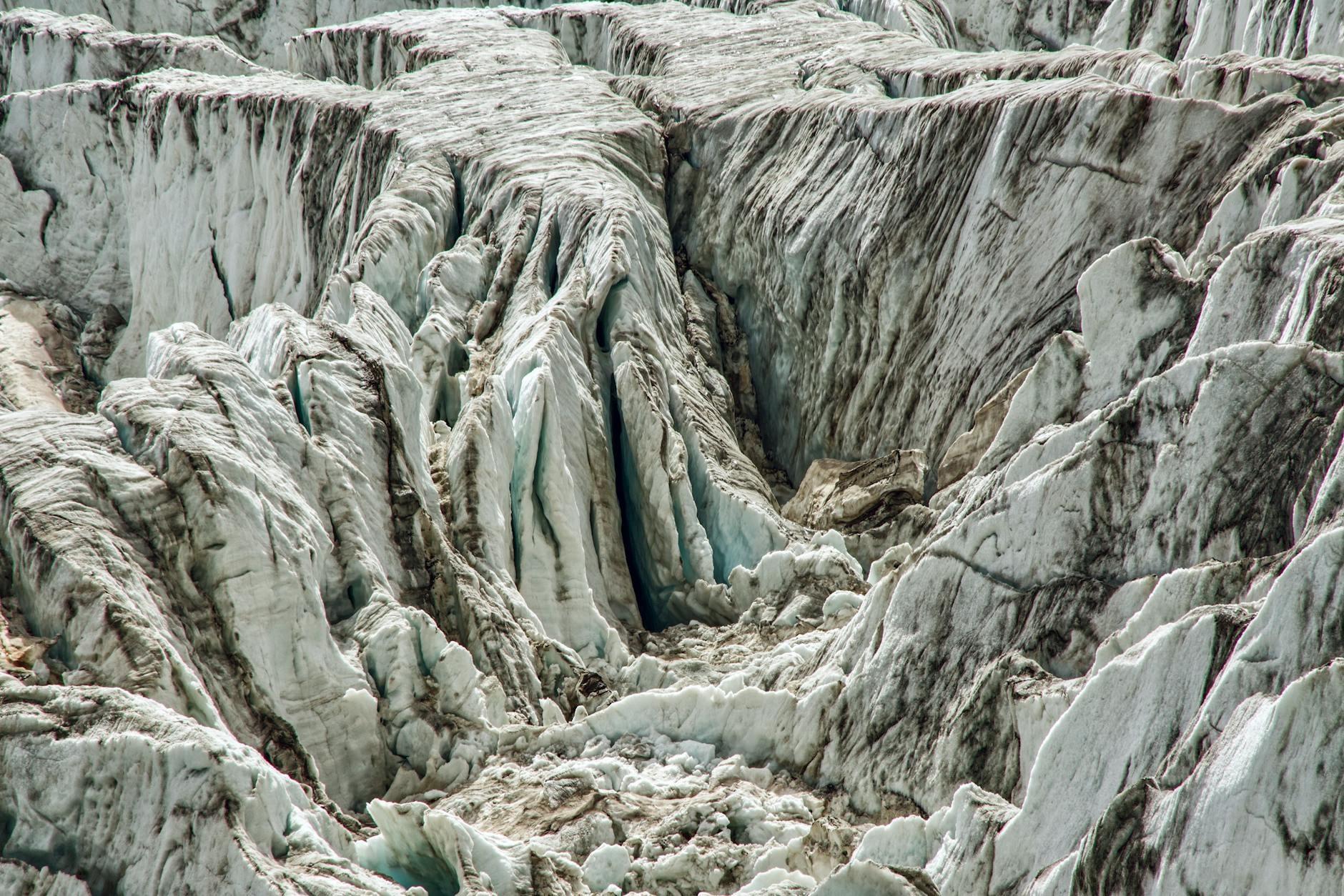
Repeatedly during the Pleistocene (2.5mil-12,000 years ago), glaciers mantled big swaths of the planet, spilling down from the high latitudes and the mountains to rearrange entire landscapes. Many inhabitants of the Northern Hemisphere live on ground freshly (by geological timescale) sculpted by these giant masses of ice, whether they recognize it or not.
These days, glaciers—which require a year-round snowfield of sufficient size and weight to compress ice and make it mobile—are a much more restricted phenomenon; the ice caps of Antarctica and Greenland are the only places, really, to get a true sense of Ice Age ambience. But even the modest-sized glaciers of our age are spectacular sights, not least because of their generally magnificent surroundings of raw mountains or polar highlands. And the glacier-oriented traveler has a keen sense of time pressure, too: Global warming appears to be hastening the extinction of icefields around the world, from the roof of the Andes to the Swiss Alps.
Seeing glaciers can mean trekking to remote country, but some splendid examples are surprisingly accessible. Many glaciers in the Alps can be appreciated in style and comfort: for example, the Pasterze on Austria’s highest peak, the Grossglockner, which you ride a funicular to view. Cruises of the Inside Passage will get you up close and personal with the giant tidewater glaciers of Alaska’s southeastern coast. And in the Canadian Rockies, you can ride the one-of-a-kind Ice Explorer vehicle out onto the mighty Athabasca Glacier, part of the biggest icefield in the Rockies (the Columbia).
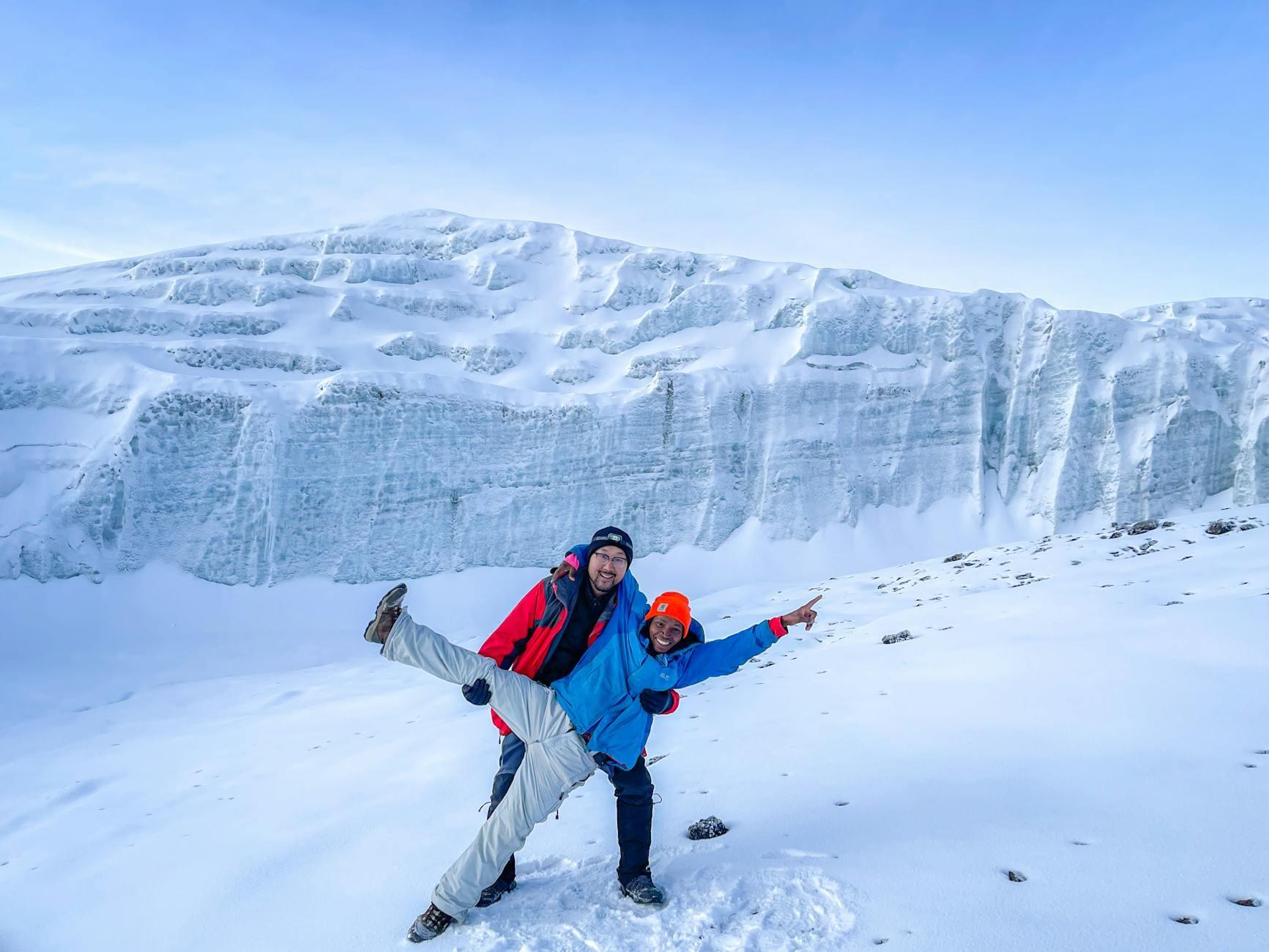
Many glaciers, though, are communed with up-close-and-personal only by foot travelers. In Washington’s Olympic National Park, you can hike to the Blue Glacier on Mount Olympus via the Hoh River Trail, which leads you through some of the world’s most incredible temperate rainforest en route. Few glaciers are so celebrated as the fast-vanishing ice fields atop Mount Kilimanjaro (famously evoked in Ernest Hemingway’s “The Snows of Kilimanjaro): It’s downright mind boggling to reach these walls of white after trekking for days through the tropical forests and bamboo groves of the lower slopes.
Paying a visit to a glacier is a way to mull the deep time of the planet and its monumental geophysical forces; but these days, it’s also an opportunity to reflect on the heavy hand of humankind upon the planet—and the ephemeral nature of even the most majestic landscapes.