ExploretheGo.lifeConnect
Log inSign up
theGo.lifeCarpe the Diem.
ResourcesTermsPrivacy
thego.life
Witness an Eclipse hero
← Life list
Journey

Witness an Eclipse

Sign up to track this →

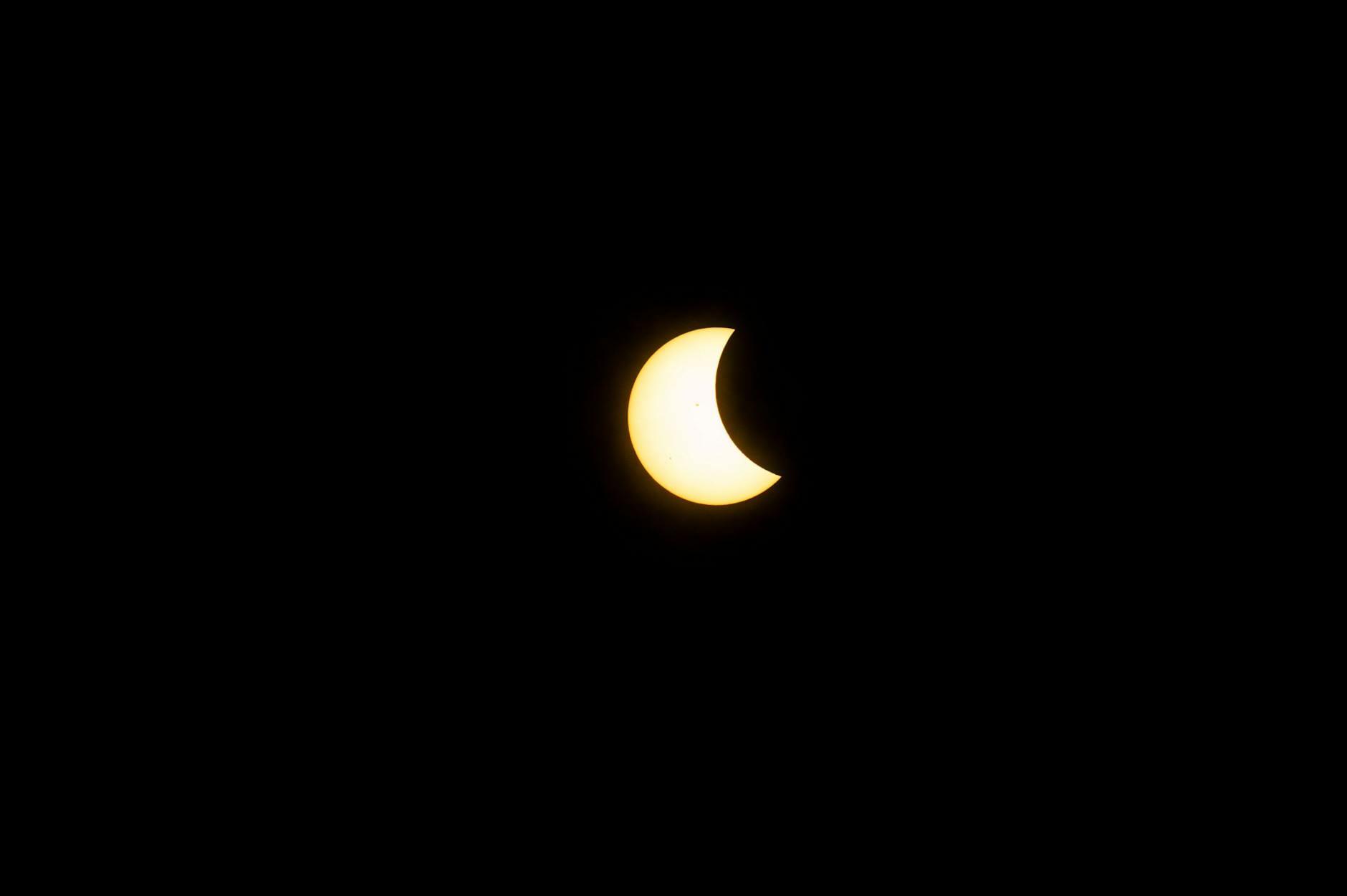
The Audubon Society Field Guide to the Night Sky states “A total solar eclipse is perhaps the most awesome celestial event.” Which, as far as praise goes, is up there. The eerie daytime darkness during such an eclipse’s totality is discombobulating, even otherworldly. While less dramatic, a total lunar eclipse certainly has its own spectral quality. When inside Earth’s umbra (shadow), the full Moon commonly glows red, a result of incoming sunlight being refracted through our atmosphere—manifesting the so-called “Blood Moon.”

A solar eclipse results when the new Moon appears to move across the face of the Sun. The Moon passes between Earth and the Sun every month, but only a few times a year, when the Moon’s orbit is properly aligned with Earth’s, does an eclipse occur. When a spot on Earth’s surface passes into the dark center of the Moon’s shadow, the umbra, a total solar eclipse happens. If the Moon is far enough from Earth (remember: orbits are elliptical, not circular), the umbra doesn’t cast upon our planet, and an ‘annular solar eclipse’ occurs, where the Sun haloes the Moon.

A lunar eclipse happens occasionally at the other end of the Moon’s monthly cycle, when the Moon is entirely shrouded in Earth’s umbra.

Whether full or partial, solar or lunar, eclipses are striking to witness. Even with full knowledge of the science behind them, it’s not hard to understand why early human cultures often interpreted these events as full of portent—even apocalyptic in significance.

Because they involve the trackable geometries of the Earth, Sun, and Moon, eclipses are predictable events; NASA, for instance, publishes a calendar for upcoming eclipses along with their viewing locations. Solar eclipses are slightly more common than their lunar counterparts, but the latter are more familiar because anyone with a view of the Moon can see them. A total solar eclipse, by contrast, usually occurs over a given spot only once every several hundred years, so the chances are that to see one you’ll have to travel—possibly some distance. Many tour companies offer package itineraries based around eclipse-viewing and photography. As with so many celestial happenings, places with dark, reliably clear skies—deserts, for instance—are ideal.

You don’t need special equipment to appreciate a lunar eclipse, though binoculars or a telescope can facilitate study of the Moon’s surface during the event. Solar eclipses, though, warrant caution because of the irreversible ocular damage that can result from looking (whether with your naked eye or through a lens) unprotected at the Sun. One simple solution is to use a homemade pinhole projector; check out this page for instructions on constructing such a tool.

More journey
Climb Kilimanjaro
Tanzania
Climb Sand Dunes
Cross the Equator by Land
Everest Base Camp
Nepal