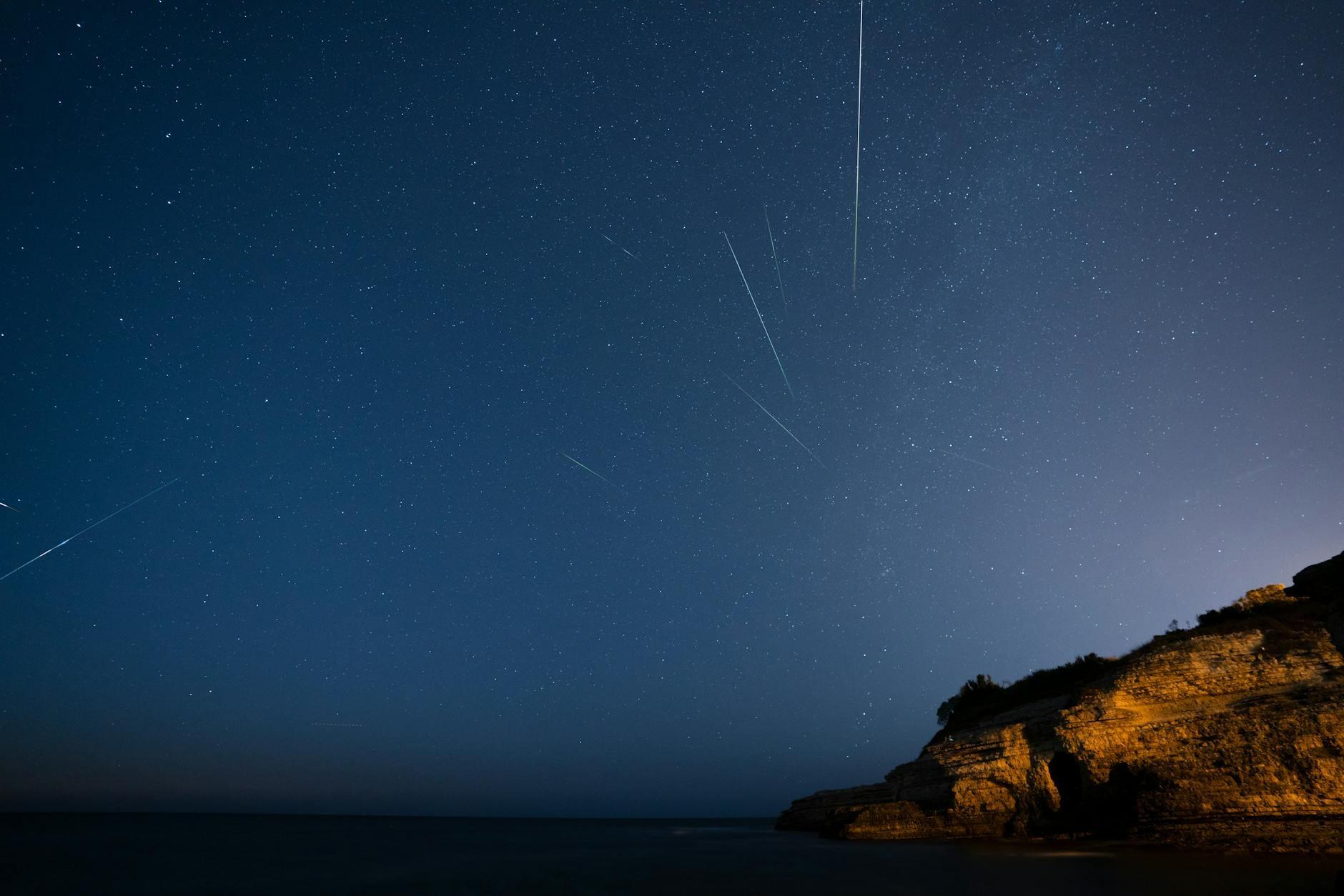
On any clear night, you may be fortunate to spot a thrilling streak across the heavens: a so-called “shooting star”, that results when a fragment of extraterrestrial rock—often merely pint-sized—burns up as it plows through Earth’s atmosphere at intense velocity. The fragments in question are actually called meteoroids, and are to stars what a grain of sand is to the Earth; on the rare occasion, one survives its fiery passage and makes landfall, the extraterrestrial stone is then known as a meteorite.
As stirring as the randomly glimpsed shooting star is, few spectacles compare to a full-on meteor shower. During such events, the orbit of the Earth intercepts the vast, debris-choked tail of a comet, resulting in high frequencies of meteors; sometimes resulting in multiple streaks per minute. Because meteor showers arise from predictable intersections of heavenly bodies, the more sensational are well-known, celebrated events on the astronomical calendar.
Famed examples include the Perseids of mid-August; the Leonids of mid-November; and the Geminids of mid-December, all of them named for the constellations from which they appear to spring—their ‘radiants’, as such source regions are known.
There are loads of lesser-known meteor showers, including the Delta Aquarids and the Orionids, but—all things considered—those abovementioned standout shows offer the best bang for your buck. You can track down this year's calendar of showers online, at the American Meteor Society's website.
The wonderful thing about meteor showers is that they don’t require expensive equipment or esoteric expertise. They’re naked-eye spectacles for which the single-most important ingredient is a deeply dark sky with an unobstructed view of the pertinent radiant.
Urban areas typically mean heavy light pollution, and make poor vantage points; so an excellent strategy is to plan a camping trip to a remote (or at least semi-remote) region to coincide with a meteor shower. If you’re feeling adventurous, why not aim for a location specially recognized by the International Dark Sky Association for pristine nighttime heavens? These include International Dark Sky Parks (such as Galloway Forest Park in Scotland, Natural Bridges National Monument in Utah, and Eifel National Park in Germany) and International Dark Sky Reserves (such as Exmoor National Park in England and the Reserve at Mont-Mégantic in Canada). You can track down a meteor-watching destination par excellence in the International Dark Sky Association's database.
Whether you’re in a suburban greenspace or isolated wilderness, give your eyes time to adjust to the dark; situate yourself with a good prospect of the radiant constellation; and—significantly—make sure you’re wearing appropriate outerwear to ward against the chill of night and inspirational eats (or drinks) at easy reach.
One last tip: Shooting stars are much easier to see without the glare of the Moon in the sky, so time your skywatching accordingly.