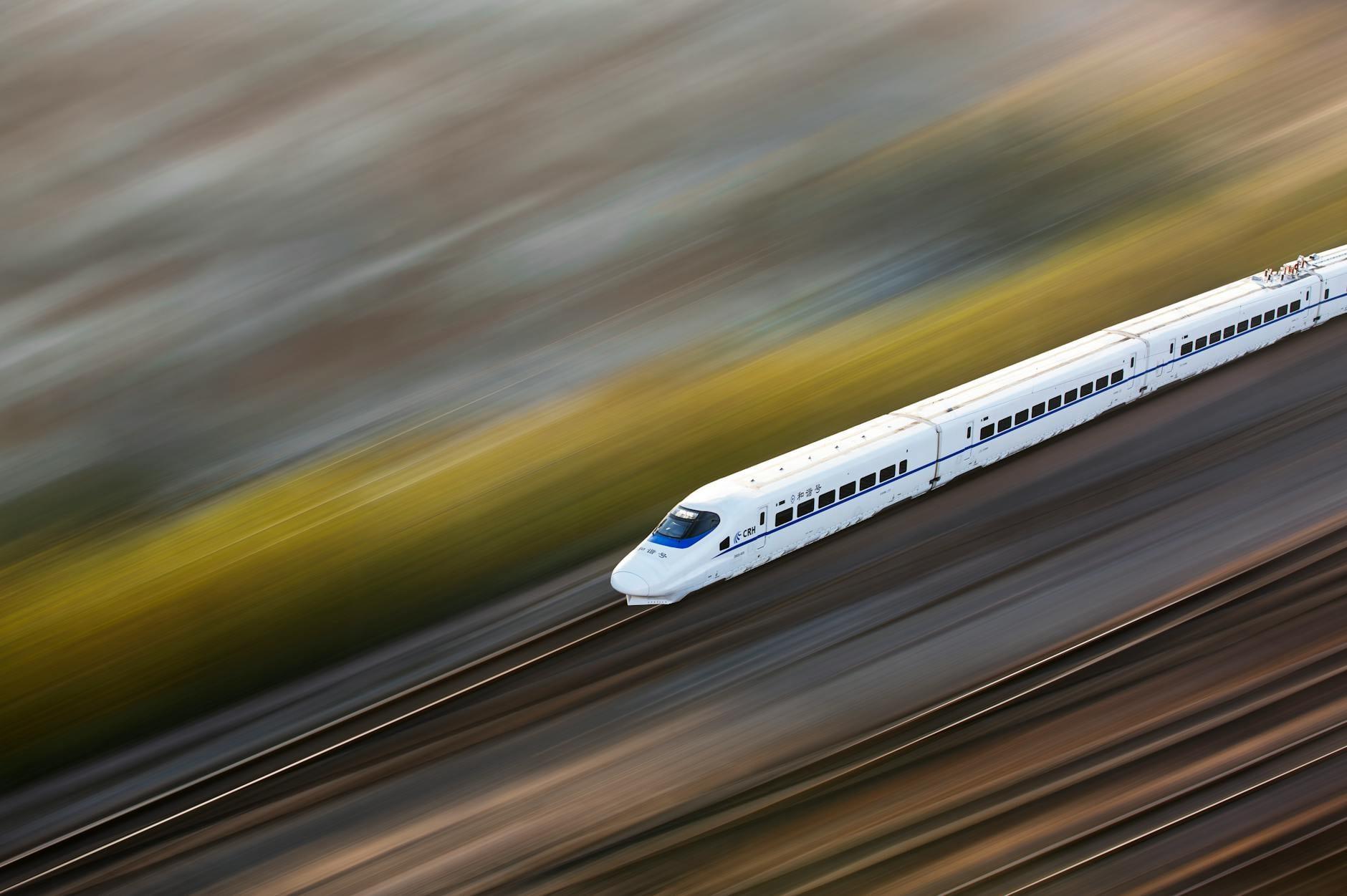
Fun fact: 9mm bullets actually travel over 1,000ft/s, while bullet trains only go about 350ft/s. Saying that at the station in the hopes of getting a discount for pointing out a misnomer is more likely to get you arrested than save some yen though. So we don’t recommend it.
A literal translation of the Japanese term dangan ressha, this nickname was given to modern, high-speed trains in Japan in the early 1930s. Japan was the first country to develop high-speed travel by rail, but today a bullet train is known as any train dedicated to high-speed rail travel, especially those with a sleek, streamlined appearance. They are widespread throughout Asia and breaking ground in other parts of the world. Most connect urban areas and travel between between 180 and 250 miles per hour, but some can go as fast as 300 mile per hour. So where's the best place to travel from city to city in the blink of an eye?
The original bullet train lines, called Shinkansen, have been operating for 50 years, and now high-speed trains crisscross Japan, connecting all of the major cities. They are known for safety, punctuality, and comfort. In China, the CRH380A, which tops out at 240 miles per hour, is an electric train connecting many urban centers, including Shanghai, Nanjing, Hangzhou, Wuhan, and Guangzhou.
Europe, with many major cities in close relation to one another, is quickly developing the infrastructure necessary for high-speed rail. Today, you can ride between London and Paris with trains that travel under the English channel at 199 mile per hour. In Spain, the AVE Talgo-350 can take you from Madrid to Barcelona in under three hours at 200 miles per hour.
When it comes to high-speed rail, the United States lags far behind the rest of the world. The state of California has embarked on a huge project to link San Diego, Los Angeles, and San Francisco. Unfortunately if you want to catch a bullet train in North America, you will have to wait until 2029.